Introduction
Hello,
I am Dr. Hirotaka Kohrita,
Director of Kohrita Hiro Orthopedic & Plastic Surgery Clinic,
located near Shin-Osaka, Yodogawa-ku, Osaka, Japan.
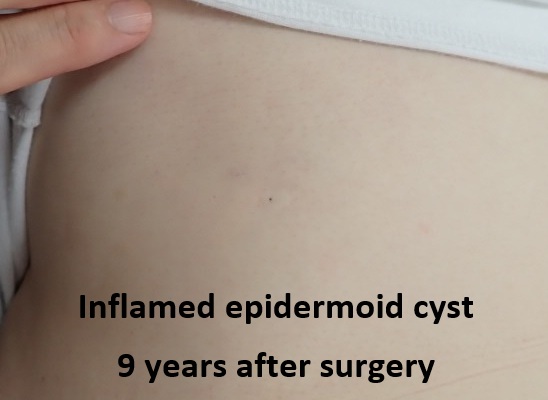
In this article, I present a case of an inflamed epidermoid cyst
ofthe abdomen that did not improve with antibiotic therapy.
We performed punch excision and were able to confirm
a favorable long-term outcome with no recurrence
andan almost invisible scar up to 9 years after surgery.
About the Patient
The patient was a woman in her 40s.
She had noticed a cyst on her abdomen for approximately ten years,
but recently it became red, swollen, and very painful,
prompting her to visit a local clinic.
At that clinic, she was told:
“We cannot operate while the inflammation is severe.
Let us first reduce the inflammation with antibiotics.”
Antibiotics were prescribed accordingly.
Antibiotics Failed and Symptoms Worsened
Despite taking the antibiotics, the inflammation did not subside.
Instead, redness and pain intensified day by day,
and she developed severe pain that prevented her from sleeping.
She therefore searched online for a clinic that would perform surgery
even in the presence of strong inflammation
and visited our clinic from another prefecture.
Antibiotics Are Ineffective for Inflamed Epidermoid Cysts
For inflamed epidermoid cysts, antibiotics are ineffective.
As I have repeatedly explained on our website,
cyst inflammation occurs inside the capsule (sac).
This capsule contains no internal blood vessels.
No matter how potent an antibiotic may be,
its components cannot reach the inside of the capsule.
This follows the same logic as:
“Even if you swallow a painkiller,
it will not relieve pain in the trousers you are wearing.”
Possible Harm Caused by Antibiotics
Antibiotics act broadly against bacteria throughout the body.
However, many commensal (resident) microorganisms
are essential for maintaining human health.
When antibiotics are taken, these beneficial bacteria may also be destroyed,
leading to adverse effects such as diarrhea.
For example, disruption of intestinal flora, including E. coli,
can result in loose stools.
If antibiotics were truly effective for inflamed cysts,
their use might still be considered despite some side effects.
However, they do not work for this condition.
As a result:
-
the cyst does not improve
-
only protective normal flora are harmed
The benefits are extremely limited,
while the risks clearly outweigh them.
For this reason, we do not prescribe antibiotics for inflamed epidermoid cysts.
Surgery Is Possible Even With Strong Inflammation
Most medical institutions believe:
“Surgery is impossible when inflammation is severe.”
“Punch excision should never be performed.”
However, surgery is entirely possible even in an inflamed state.
In this case as well, we were able to excise the cyst without any complications using the punch excision technique.
Course From Preoperative Period to 9 Years
Below are photographs documenting the course
from the preoperative stage through surgery and postoperative follow-up.
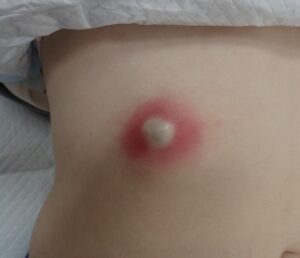
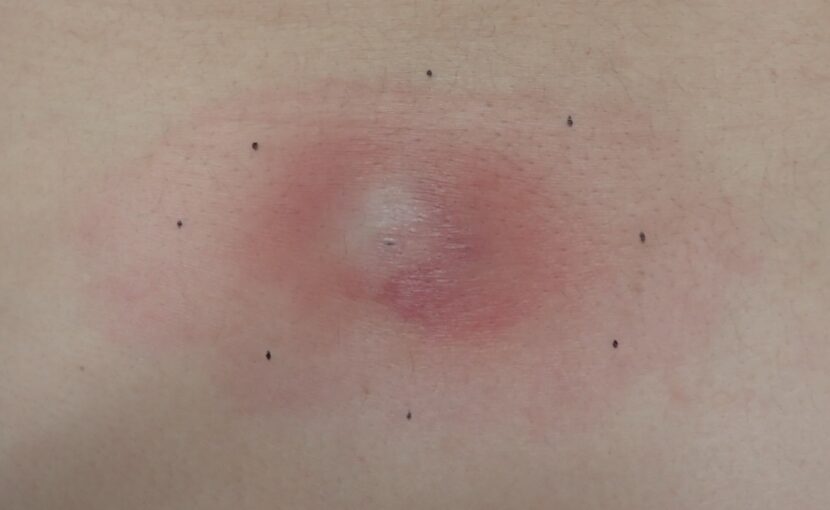
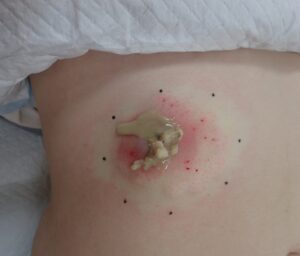
Preoperative appearance of an inflamed epidermoid cyst on the abdomen, showing significant redness, swelling, and severe pain.
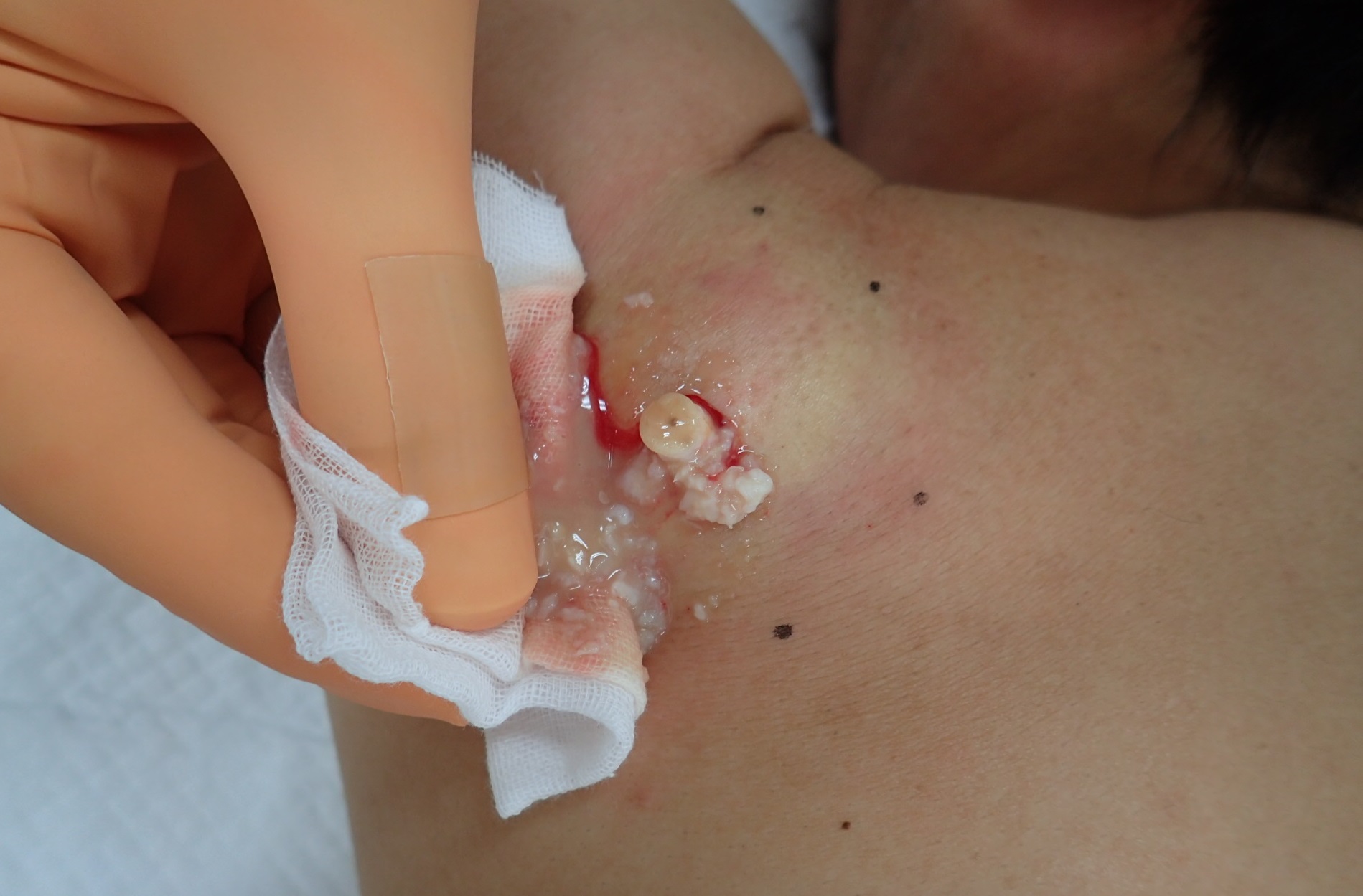
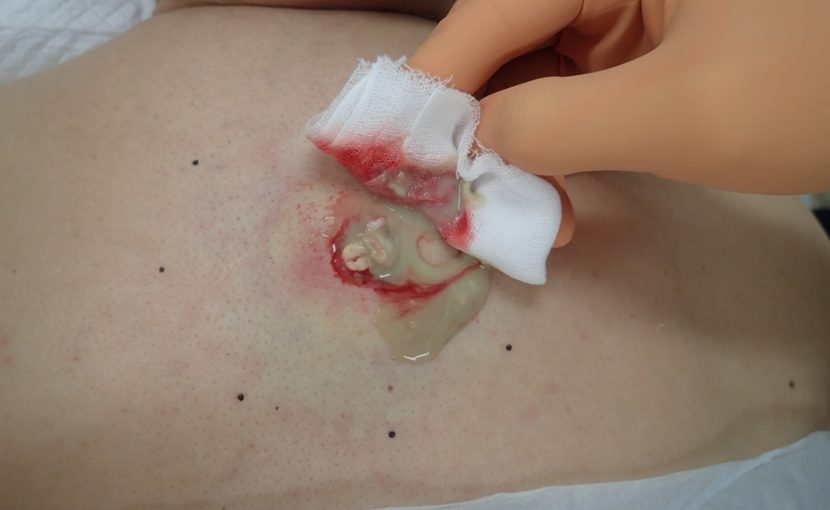
Intraoperative view of an inflamed epidermoid cyst on the abdomen, showing discharge of cyst contents during punch excision.
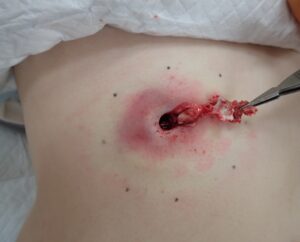
Intraoperative view of an inflamed epidermoid cyst on the abdomen, showing removal of the cyst capsule using the punch excision technique.
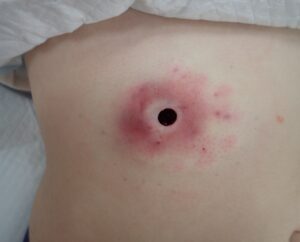
Immediate postoperative appearance of an inflamed epidermoid cyst on the abdomen, showing minimal bleeding after punch excision.
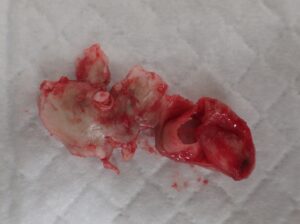
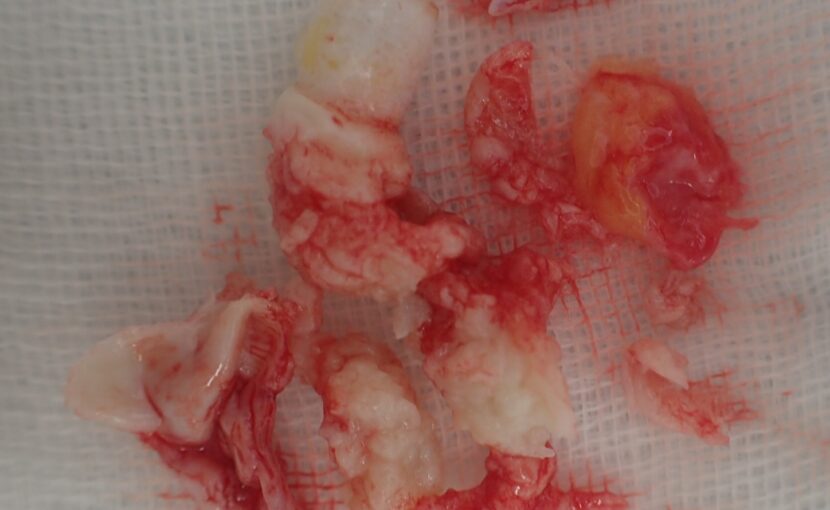
The excised capsule of an inflamed epidermoid cyst removed using the punch excision technique.
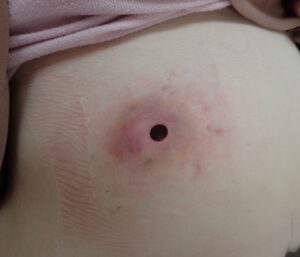
Postoperative day 1 appearance after punch excision of an inflamed epidermoid cyst on the abdomen, with minimal bleeding and pain.
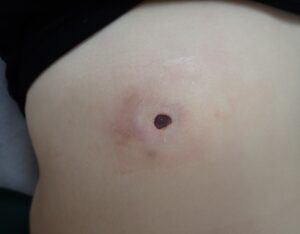
Postoperative day 5 appearance after punch excision of an inflamed epidermoid cyst on the abdomen, with minimal oozing and no pain.
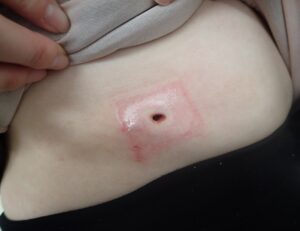
Postoperative day 12 appearance after punch excision of an inflamed epidermoid cyst on the abdomen, with no bleeding or pain.
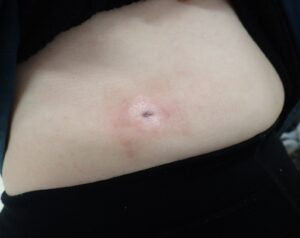
Postoperative day 25 appearance after punch excision of an inflamed epidermoid cyst on the abdomen, showing near-complete healing with no symptoms.
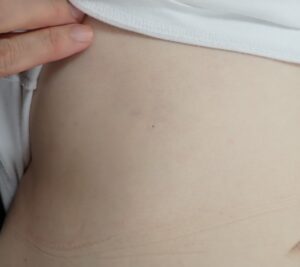
Nine years after punch excision of an inflamed epidermoid cyst on the abdomen, with the scar barely visible.
At 9 years after surgery, the patient returned
because another cyst developed at a different site.
She clearly remembered our clinic.
I said, “You remembered us well.”
She replied, “Of course! You treated it beautifully.”
These words were very encouraging.
Message to Patients Suffering From Inflamed Cysts
If you suffer from an inflamed epidermoid cyst,
I recommend visiting a clinic that provides definitive surgical treatment,
rather than one that relies solely on antibiotics.
🔵 Frequently Asked Questions About Epidermoid Cysts (FAQ)
Q1. What is an epidermoid cyst?
A. An epidermoid cyst (atheroma) is a benign,
sac-like tumor beneath the skin.
It contains sebum and keratin and rarely disappears spontaneously.
If left untreated, it may become inflamed, painful, and produce pus.
Q2. Can it heal naturally?
A. In most cases, it cannot.
Even if it appears to shrink, the capsule remains,
making recurrence common.
Surgical excision is required to prevent recurrence.
Q3. Is surgery impossible during inflammation?
A. Many hospitals say so; however, at our clinic,
punch excision is possible even when inflammation is present.
Early surgery often leads to faster relief of pain and swelling.
Q4. Are antibiotics ineffective?
A. Yes. Because inflammation occurs inside a non-vascular capsule, medications cannot reach the site.
Removal of the capsule by surgery is therefore the fundamental treatment.
Q5. What is the punch excision method?
A. The capsule is removed through the smallest possible incision.
Postoperative pain and scarring are minimal.
Q6. What is Natsui-style moist wound healing?
A. This postoperative care method maintains a moist wound environment
without disinfection or gauze.
Showering is permitted from the next day,
and antibiotics are generally not required.
Q7. Will it recur after proper excision?
A. If the capsule is completely removed, recurrence is extremely rare.
We emphasize careful intraoperative confirmation of capsule removal.
Q8. How much pain occurs after surgery?
A. Even in severely inflamed cases, most patients experience far less postoperative pain than expected.
Q9. Should it be excised while still small?
A. Yes. Smaller cysts allow for shorter operations and smaller scars.
Q10. Is it covered by Japanese health insurance?
A. Yes. Epidermoid cyst surgery is covered by health insurance in Japan,
although fees vary depending on size and location.
▶ View More Case Articles About Epidermoid Cysts
Our Treatment Philosophy: Natsui-Style Moist Wound Healing
“Natsui-style moist wound healing,”
established by Dr. Mutsumi Natsui,
avoids disinfection and gauze while maintaining a moist wound environment
to minimize pain and promote healing.
Our clinic practices wound management based on this effective philosophy.
▶ Official Site “New Wound Care”
Author Information
Author: Dr. Hirotaka Kohrita
Director, Kohrita Hiro Orthopedic & Plastic Surgery Clinic
Specialties: Orthopedic surgery, plastic surgery, burns,
epidermoid cyst surgery
Experience & Achievements:
Over 6,000 cyst-focused surgeries (approximately 500 per year).
More than 1,000 real clinical cases are published on our blog.
All cases are personally managed by the director from consultation through surgery and follow-up.