院長執筆・1,000記事以上 症例・処置実績を見る

CASE & TREATMENT REPORT

Thumb Amputation: A Case of Fingertip Regeneration Without Surgery

A thumb fingertip amputation treated without surgery or antibiotics. Using Natsui-style mo…

症例・処置実績 なつい式湿潤療法 傷、怪我

症例写真を掲載しています 治療内容や経過を分かりやすくお伝えするため、患部・処置中の写真を含む場合があります。

Introduction

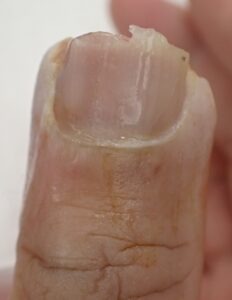
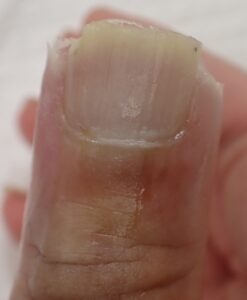
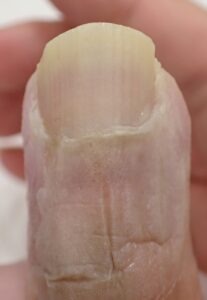
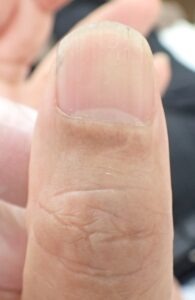
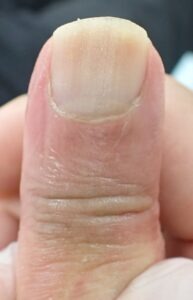
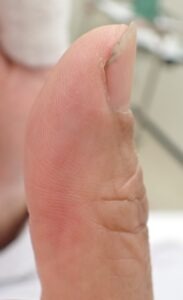
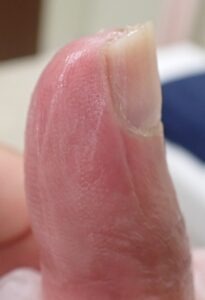
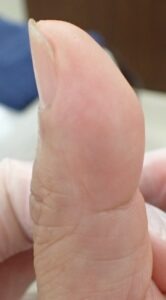
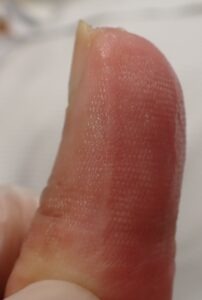
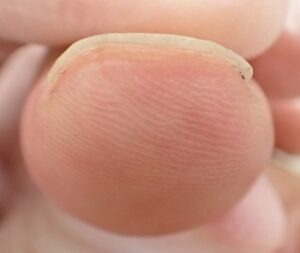
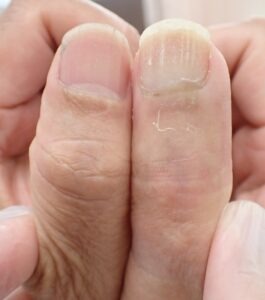
Bilateral thumb comparison 52 days after fingertip amputation, with the right thumb as the injured side, showing minimal difference using Natsui-style moist wound healing.
Bilateral thumb comparison on day 52 after fingertip amputation. The right thumb was injured, yet shows minimal difference compared to the uninjured side using Natsui-style moist wound healing.

This is a case of thumb amputation in which the patient
was told at a university hospital:

  • “It will never return to normal.”

  • “The finger will definitely become shorter.”

  • “You will need flap surgery.”

However, in reality, the thumb regenerated beautifully
without any surgery and without any antibiotics,
using Natsui-style moist wound healing alone.

This case is highly instructive—not only for the patient,
but also as a reminder to re-examine
what we consider “standard” medical practice.


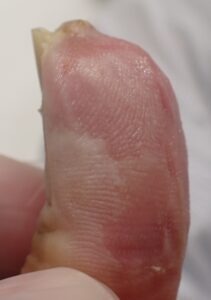
Injury Details
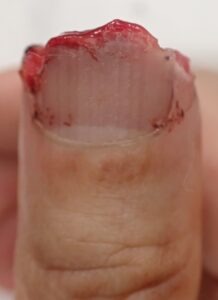
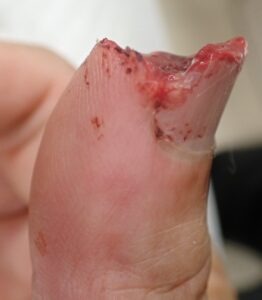
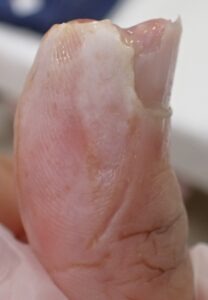
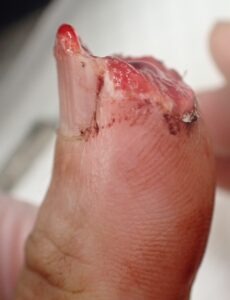
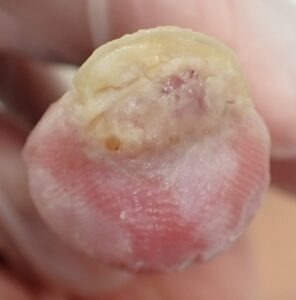
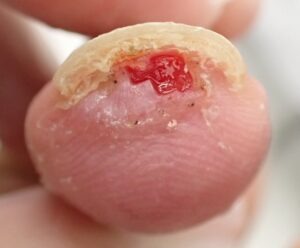
Dorsal view of a thumb with fingertip amputation caused by an electric saw, showing loss of the nail and skin, a condition typically considered for flap surgery or stump revision.
Fingertip amputation caused by an electric saw, with loss of the nail and skin. This condition is generally considered an indication for flap surgery or stump revision.
  • Male in his 60s

  • Traumatic injury caused by an electric saw

  • Near-amputation of the right thumb

  • He was transported by ambulance to ○○ University Hospital


What the University Hospital Explained
and How They Treated Him

According to the patient, the university hospital explained:

  • “The finger will not regenerate.”

  • “It will definitely become shorter.”

  • “Disinfection, ointment, and gauze dressings are necessary.”

  • “Flap surgery will be needed in the future.”

The patient was devastated by the statement:

“My finger will never return to what it was.”


Why He Came to Our Clinic

In despair, he searched desperately for information online
and eventually found our blog.

Later he told us:

“I was clinging to hope—like grabbing at a straw.”


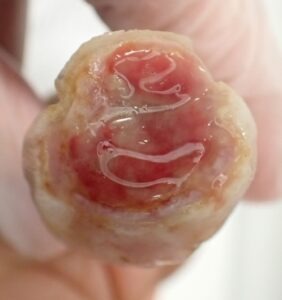
Our Assessment at the First Visit
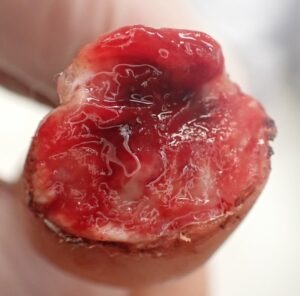
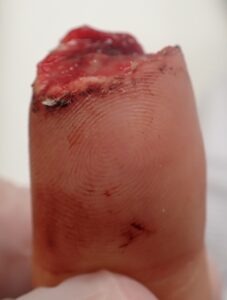
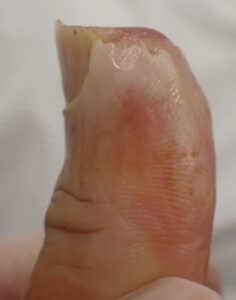
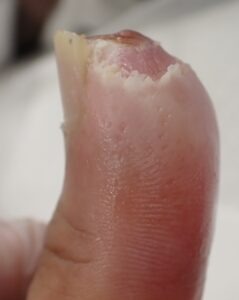
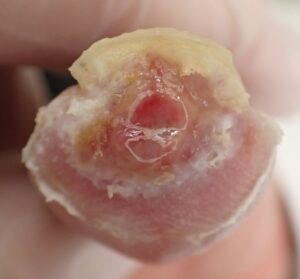
Frontal view of a thumb with fingertip amputation caused by an electric saw, showing loss of the nail and skin, typically considered for flap surgery or stump revision.
Day 0 Frontal View

On examination, we determined:

  • There were no signs of infection

  • The tissue still had sufficient regenerative potential

So I told him clearly:

  • Surgery is not necessary.

  • Do not undergo flap surgery.

  • With Natsui-style moist wound healing, the finger can regenerate cleanly.


What We Explained About
Natsui-Style Moist Wound Healing

  • Do not disinfect

  • Do not let the wound dry out

  • Cover the wound appropriately with a wound dressing
    to maintain a moist environment

  • Because there were no signs of infection,
    we prescribed no antibiotics


Course and Outcome

Below, the regeneration process is shown chronologically
—from the first visit to day 63—
using images from each direction:

  • Dorsal (back of the thumb)

  • Volar

  • Lateral views

  • Frontal view


Dorsal View

Dorsal view of a thumb with fingertip amputation caused by an electric saw, showing loss of the nail and skin, a condition typically considered for flap surgery or stump revision.
Day 0
Dorsal view of the thumb 9 days after fingertip amputation, showing early epithelialization and rounding of the fingertip under Natsui-style moist wound healing.
Day 9
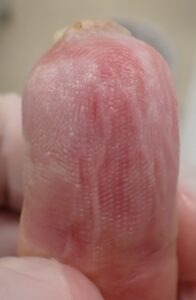
Dorsal view of the thumb 23 days after fingertip amputation, showing no signs of inflammation and stable epithelialization with Natsui-style moist wound healing.
Day 23
Dorsal view of the thumb 37 days after fingertip amputation, showing clear fingertip regrowth and no signs of inflammation with Natsui-style moist wound healing.
Day 37
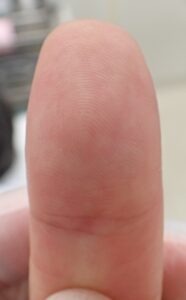
Dorsal view of the thumb 52 days after fingertip amputation, showing near-complete healing with no pain or inflammation using Natsui-style moist wound healing.
Day 52
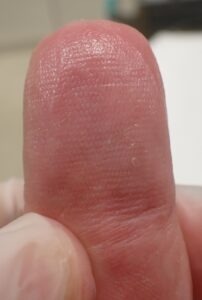
Dorsal view of the thumb 63 days after fingertip amputation, showing minimal side-to-side difference and no pain using Natsui-style moist wound healing.
Day 63

Volar View

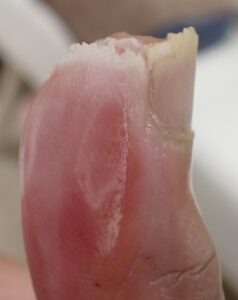
Volar view of a thumb with fingertip amputation caused by an electric saw, showing loss of the nail and skin, typically considered for flap surgery or stump revision.
Day 0
Volar view of the thumb 9 days after fingertip amputation, showing epithelialization and early rounding with Natsui-style moist wound healing.
Day 9
Volar view of the thumb 23 days after fingertip amputation, showing no signs of inflammation and stable epithelialization with Natsui-style moist wound healing.
Day 23
Volar view of the thumb 37 days after fingertip amputation, showing clear fingertip regrowth and no signs of inflammation with Natsui-style moist wound healing.
Day 37
Volar view of the thumb 52 days after fingertip amputation, showing near-complete healing of the fingertip pulp with no pain using Natsui-style moist wound healing.
Day 52
Volar view of the thumb 63 days after fingertip amputation, showing complete healing of the fingertip pulp with no pain using Natsui-style moist wound healing.
Day 63

Left Lateral View

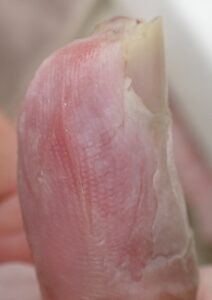
Left lateral view of a thumb with fingertip amputation caused by an electric saw, showing loss of the nail and skin, typically considered for flap surgery or stump revision.
Day 0
Left lateral view of the thumb 9 days after fingertip amputation, showing early epithelialization and rounding of the fingertip with Natsui-style moist wound healing.
Day 9
Left lateral view of the thumb 23 days after fingertip amputation, showing no signs of inflammation and stable epithelialization with Natsui-style moist wound healing.
Day 23
Left lateral view of the thumb 37 days after fingertip amputation, showing clear fingertip regrowth and no signs of inflammation with Natsui-style moist wound healing.
Day 37
Left lateral view of the thumb 52 days after fingertip amputation, showing near-complete healing with no pain or inflammation using Natsui-style moist wound healing.
Day 52
Left lateral view of the thumb 63 days after fingertip amputation, showing minimal side-to-side difference and no pain using Natsui-style moist wound healing.
Day 63

Right Lateral View

Right lateral view of a thumb with fingertip amputation caused by an electric saw, showing loss of the nail and skin, typically considered for flap surgery or stump revision.
Day 0
Right lateral view of the thumb 9 days after fingertip amputation, showing early epithelialization and rounding with Natsui-style moist wound healing.
Day 9
Right lateral view of the thumb 23 days after fingertip amputation, showing no signs of inflammation and stable epithelialization with Natsui-style moist wound healing.
Day 23
Right lateral view of the thumb 37 days after fingertip amputation, showing clear fingertip regrowth and no signs of inflammation with Natsui-style moist wound healing.
Day 37
Right lateral view of the thumb 52 days after fingertip amputation, showing near-complete healing with no pain or inflammation using Natsui-style moist wound healing.
Day 52
Right lateral view of the thumb 63 days after fingertip amputation, showing minimal side-to-side difference and no pain using Natsui-style moist wound healing.
Day 63

Frontal View

Frontal view of a thumb with fingertip amputation caused by an electric saw, showing loss of the nail and skin, typically considered for flap surgery or stump revision.
Day 0
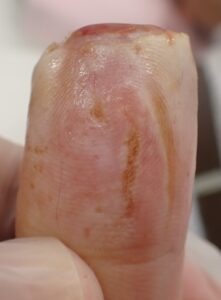
Frontal view of the thumb 9 days after fingertip amputation, showing epithelialization and early rounding with Natsui-style moist wound healing.
Day 9
Frontal view of the thumb 23 days after fingertip amputation, showing no signs of inflammation and stable epithelialization with Natsui-style moist wound healing.
Day 23
Frontal view of the thumb 37 days after fingertip amputation, showing clear fingertip regrowth and no signs of inflammation with Natsui-style moist wound healing.
Day 37
Frontal view of the thumb 52 days after fingertip amputation, showing near-complete healing with no pain or inflammation using Natsui-style moist wound healing.
Day 52
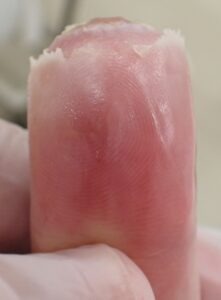
Frontal view of the thumb 63 days after fingertip amputation, showing minimal side-to-side difference and no pain using Natsui-style moist wound healing.
Day 63

Summary of the Result

The wound gradually epithelialized, and the fingertip contour
and nail line were naturally reconstructed.

As a result, the finger regenerated without becoming shorter.

Dorsal view of a thumb with fingertip amputation caused by an electric saw, showing loss of the nail and skin, a condition typically considered for flap surgery or stump revision.
Day 0 Dorsal View
Dorsal view of the thumb 63 days after fingertip amputation, showing minimal side-to-side difference and no pain using Natsui-style moist wound healing.
Day 63 Dorsal View

The Patient’s Words at the Final Visit

At the last visit, the patient said:

“I’m truly glad my finger returned to normal.
I had been reading your blog, so I was able to come here.
Thank you very much.”

As a physician, there are few words more gratifying.


What This Case Teaches

  • “Amputation” does not always mean “no regeneration.”

  • Flap surgery should be considered a last resort,
    not an automatic choice.

  • With correct knowledge, a patient’s future can change.

If this article becomes “hope” or a “new option” for someone suffering
in a similar situation, nothing would make me happier.


FAQ: Natsui-Style Moist Wound Healing

Q1. What is Natsui-style moist wound healing?

A. Moist wound healing is a method that supports
the body’s natural healing by keeping the wound moist rather than dry.
By avoiding disinfectants and gauze
and maintaining an appropriate moist environment
with dressings, pain is often reduced and scars
may heal more cleanly.
Our clinic treats wounds based on
Natsui-style moist wound healing.

Q2. Why don’t you disinfect the wound?

A. Disinfectants can kill not only bacteria
but also the cells needed for healing,
which can delay recovery and make scarring worse.
In Natsui-style moist wound healing,
we avoid disinfection and support
the skin’s natural regenerative ability.

Q3. What kind of dressing is used?

A. We use medical dressings such as hydrocolloid or polyurethane film sheets/pads to maintain a moist environment. Depending on the wound, petroleum jelly may be used as well. Bathing and showering at home are generally possible.

Q4. Is it painful?

A. Natsui-style moist wound healing avoids the pain
of “tearing off gauze.”
Because healing can be faster,
pain often decreases and painkillers may not be necessary.
It is also gentle for children and older adults.

Q5. Will the scar look good?

A. Results vary depending on depth and location,
but compared with dry wound care, moist wound healing often
results in less noticeable scarring.
It is particularly suitable for visible areas such as the face.

Q6. Do I need to visit the clinic every day?

A. Usually not.
We explain simple home-care methods so self-care is possible.
However, depending on the wound,
visits every few days may be required.

Q7. Is infection a concern?

A. If the moist environment is maintained appropriately,
the infection risk may actually be lower. However,
if increasing pain, swelling, heat, redness, or fever occurs,
please seek medical care promptly.

Q8. Is it suitable for children?

A. Yes. Because there is less pain and no need to forcibly
remove gauze, treatment stress is reduced.
We have treated many pediatric wound cases with this method.

Q9. Are there only a few hospitals that offer Natsui-style moist wound healing?

A. Yes. Medical facilities actively using this approach are still limited.
At our clinic, based on extensive clinical experience,
we treat all wounds using moist wound healing as the standard approach.

View our Natsui-style moist wound healing case archive


Author Information

Hirotaka Kohrita, MD
Director, Kohrita-Hiro Orthopedic & Plastic Surgery Clinic (Shin-Osaka, Japan)
Specialties: Orthopedics, Plastic Surgery,
Burns, Epidermoid cyst surgery

Experience: Over 6,000 cyst surgeries (approx. 500/year).
Over 1,000 case reports on our blog featuring punch excision
and Natsui-style moist wound healing.
All cases are evaluated, treated, and followed by the director personally.
View the director’s profile

症例記事をご覧になる方へ

この記事は、当院で行った診療・処置の一例を医学情報として紹介するものです。症状や治癒経過、適した治療方法には個人差があります。写真と同じ結果を保証するものではなく、診断や治療方針は診察のうえで個別に判断します。

なつい式湿潤療法について詳しく見る 傷、怪我の記事一覧へ
CONSULTATION
粉瘤・傷・やけどでお悩みの方へ

気になるしこりや、
治りにくい傷・やけども、
一人で悩まずお気軽に
ご相談ください。
最善の治療を共に行ってまいりましょう。

大阪・新大阪で、粉瘤(アテローム)に対するくりぬき法の日帰り手術と、外傷・やけど・治りにくい傷の処置を行っています。傷跡に配慮した治療や、傷の状態と生活に合わせたケアをご希望の方もご相談ください。

CLINIC & ACCESS

当院情報・アクセス

アクセス

〒532-0004 大阪市淀川区西宮原1-8-24 新大阪第3ドイビル1F

JR・地下鉄御堂筋線「新大阪駅」より徒歩圏・通院しやすい立地です。

Googleマップで見る →
診療時間
診療時間
午前 9:30〜13:00
午後 15:30〜18:00
月曜
9:30 13:00
15:30 18:00
火曜
9:30 13:00
15:30 18:00
水曜
9:30 17:00
木曜
9:30 13:00
15:30 18:00
金曜
9:30 13:00
15:30 18:00
土曜
9:30 13:00
13:00〜17:00 13:00 17:00
日曜
9:30 17:00
  • 初診、再診共に、午前12時30分、午後5時30分までと致します。
  • 休診日:祝日
  • の時間は自費診療の予約制手術日です。
  • 保険診療の手術日(粉瘤、黒子、イボ、陥入爪等)は月、木、金曜日です。
  • 午後3時30分〜午後4時までの時間帯は、手術優先とさせて頂きます。
  • 診察ご希望の患者さんは、受付は午後3時30分から可能ですが、手術が有る場合は、診療は午後4時からとなります。
  • 現在、リハビリは午前診のみとなっております。
TEL 06-6151-0055